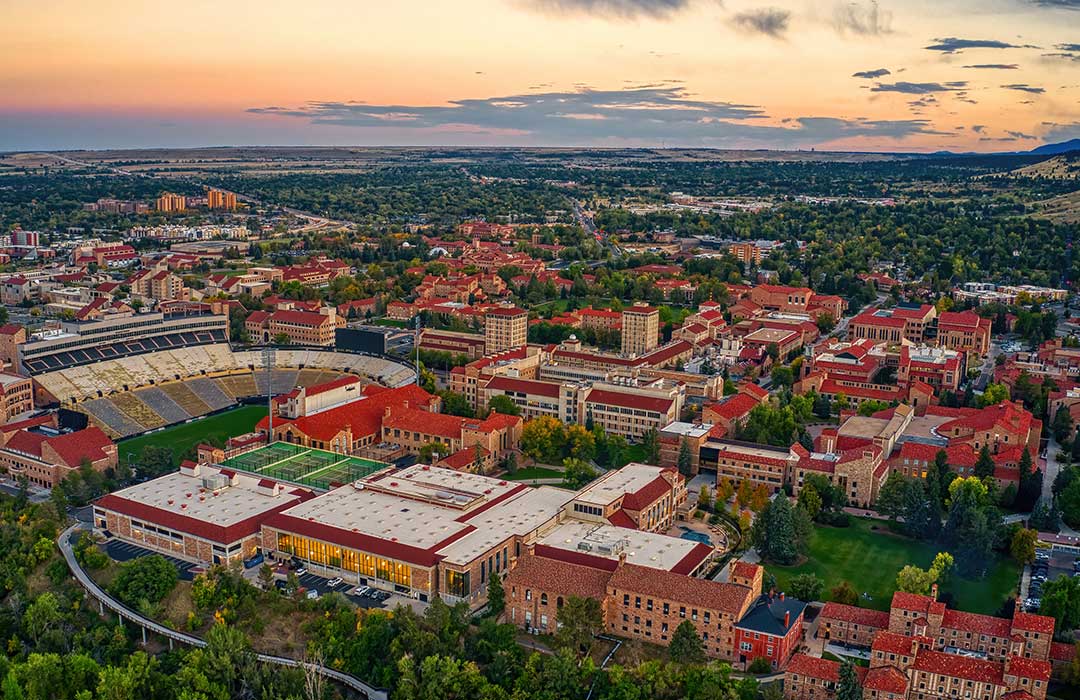

The landscape of small private higher education in California has changed dramatically over the last five years. Holy Names University closed in Oakland and was sold to a Los Angeles investment firm planning residential redevelopment. Notre Dame de Namur University in Belmont spent years under a Stanford purchase option before ultimately being acquired by the investment arm of the University of California. Mills College, the San Francisco Art Institute, and other institutions have undergone similar transitions.
These changes have created a specialized corner of commercial real estate appraisal: valuing university campuses not simply as educational facilities, but as complex real estate assets whose highest and best use may no longer be institutional.
The Campus Is Not a Single Property
The first mistake an inexperienced appraiser might make with a college campus is to treat it as one asset. Often times, a campus is a portfolio of dissimilar buildings, infrastructure, and land, each with a different market, a different conversion cost, and a different audience of likely buyers if the institution ceases to operate. Residence halls convert readily to multifamily housing. Performing arts centers and historic chapels are usually preserved for reasons that combine cost-to-replicate, deed restrictions, and community politics. Athletic fields, while contributing little structurally, often sit on the most valuable redevelopment land on the entire site. Sorting the campus into these categories is the work that drives the conclusion.
Land: The Quiet Driver of Value
On nearly every campus we have appraised, the underlying land is the dominant component of value once continued educational use is set aside. California campuses tend to sit on large, well-located, often gently sloped parcels in supply-constrained submarkets. The Holy Names campus spans 60 acres in the Oakland Hills; the NDNU campus is 46 acres in Belmont with adjacent open space. The land has value whether or not the buildings do. This drives one of the most important early questions in a campus appraisal: is the value best understood as the sum of its improved components, or as land value less demolition cost? In a surprising number of cases, the latter exceeds the former.
The Highest and Best Use Pivot
Campus valuations often begin with the assumption that continued educational use represents the highest and best use. That assumption is valid when enrollment is stable, finances are strong, and the existing improvements still serve their intended purpose efficiently. When any of those conditions no longer holds, as has increasingly been the case in California, the analysis must shift to alternative uses, evaluated for legal permissibility, physical possibility, financial feasibility, and maximum productivity. More and more often, that analysis points to residential redevelopment as the highest and best use, sometimes with historic or community-serving buildings preserved.
This pivot has important valuation consequences. A campus valued as a going educational concern relies heavily on the cost approach and the contributory value of specialized improvements. A campus valued for residential conversion relies on land residual analysis, entitlement risk, and the negative contributory value of buildings that must be demolished. The two valuation paths produce materially different numbers, and identifying which path applies or developing both and reconciling them is the central task.
Residential Conversion in California: The Entitlement Question
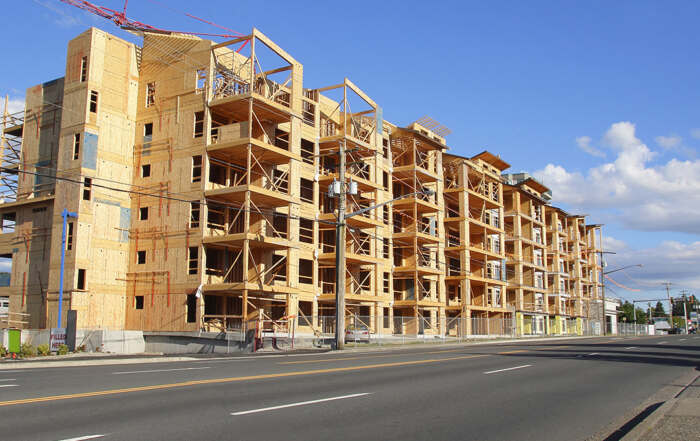
The dominant alternative use for closing California campuses is housing. California’s housing shortage gives residential development the highest land value per acre in most submarkets where these campuses sit. State legislation, particularly SB 330, which BH Properties invoked in the Holy Names application, gives builders tools to lock in zoning and streamline approvals. Density bonus law, the Housing Accountability Act, and ongoing pressure on municipalities to meet Regional Housing Needs Allocation targets all push in the same direction.
But the entitlement question is rarely simple. Campuses often sit on parcels with institutional or special-purpose zoning that does not permit residential use as of right. Historic preservation overlays, viewshed restrictions, slope limits, tree ordinances, and seismic constraints all shape what can actually be built. An appraisal that assumes a residential entitlement without examining the path to it is not a defensible appraisal. The difference between an entitled residential land value and an unentitled one can easily be a multiple of two or three, and that gap is often the most important variable in the entire assignment.
Valuation Requires Specialization
A defensible university campus appraisal requires more than applying standard commercial valuation techniques to a large property. It requires testing multiple highest and best use scenarios, including alternative uses, even when the institution remains operational; developing both an as-improved valuation and a land valuation under realistic redevelopment scenarios, and reconciling them with judgment. It also requires addressing entitlement risk directly through extraordinary assumptions or probability-weighted scenarios, disclosed to the intended user.
The wave of small private university closures is not finished. Demographic projections show the traditional college-age population declining nationally through the late 2020s, and California’s small private sector is disproportionately exposed.
As these trends continue, university campuses, and, more broadly, primary and secondary school properties, will increasingly form a distinct category within commercial real estate: assets shaped as much by redevelopment economics as by their original institutional use. This work rewards specialization. A strong campus appraisal focuses on the core real estate questions: what exists today, what it could become, and what each scenario is worth.
Valbridge Property Advisors has provided campus and institutional appraisal services for Notre Dame de Namur University, the University of Redlands Marin campus, Holy Names University, Palo Alto University, and other higher-education clients across California. We work with trustees, lenders, religious orders, redevelopment investors, and legal counsel on valuations involving adaptive reuse, residential conversion, partial-campus dispositions, and condemnation.
The information contained in this publication is for informational and educational purposes only. It is not financial, legal, or other professional advice, and you may not rely on it for any purpose. To secure professional advice for your particular situation, you must engage one or more appropriate professional advisors to advise you about your situation.
Related Services
Special Purpose Property Valuation